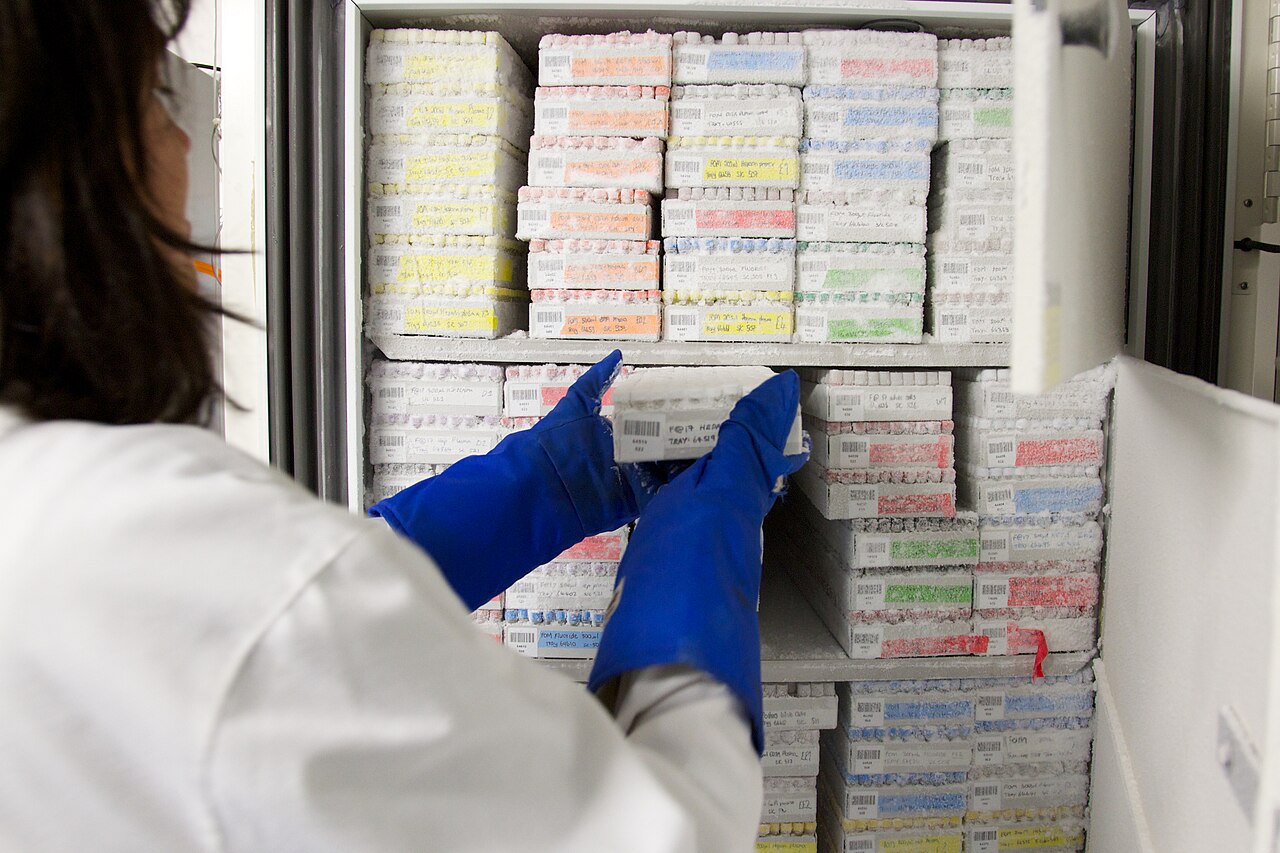
Storage is the least glamorous part of working with research materials, which is precisely why it is the part most often done badly. A peptide can arrive with a flawless certificate and still become useless if the lab cannot later say which batch it came from. Good handling is mostly about protecting that link.
Start with the supplier documentation and your SOPs
There is no single universal rule, because handling depends on the compound, the formulation, and the receiving lab's workflow. Every research material should be handled according to the supplier's documentation and the receiving laboratory's internal standard operating procedures. When those two disagree, that is a conversation to have before the vial goes into inventory, not after.
General handling principles that travel well
- Keep labels intact. Never separate a vial from its batch or lot identity. The label is the thread back to the report.
- Record receipt details. Note the arrival date, the visible condition, and the lot number the moment material enters inventory.
- Limit unnecessary exposure. Minimize avoidable light, moisture, and temperature swings, per the product documentation.
- Segregate research materials. Keep them clearly marked for in vitro laboratory research only, away from anything that could be confused for another purpose.
Why lyophilized powders are so common
Many research peptides are supplied as lyophilized - freeze-dried - powders because that format supports controlled shipping, storage, and laboratory preparation. The dry powder is simply easier to keep stable and document than a solution. The exact handling for any given product should still follow its own documentation and your lab's SOP rather than a generic rule of thumb.
A documentation checklist worth keeping
Match the vial to its COA or third-party report.
Record when the material entered inventory and in what condition.
Track exactly where the material lives in the lab.
Mark the material for in vitro laboratory research only.
Building a simple receiving routine
Most storage problems are really receiving problems in disguise. The moment a shipment arrives is the cheapest time to capture everything you will later wish you had recorded: the lot number, the arrival date, the visible condition of the vials, and where the material is being placed. A short, repeatable checklist taped to the receiving bench does more for traceability than any amount of good intentions a week later.
The goal is to make the careful path the easy path. When recording a lot number on arrival is routine rather than heroic, the link between a vial and its report tends to survive even a busy week.
When in doubt, defer to the documentation
Because handling varies so much by compound and formulation, the safest default is always the supplier's documentation paired with your lab's own SOP. If a general tip you read online conflicts with the product's own paperwork, the paperwork wins. Generic advice is a starting point for asking better questions, not a substitute for the specific guidance attached to the material in front of you.
The bottom line
Good storage will never feel exciting, and that is the point. It is how a lab keeps chain of custody intact, avoids mix-ups, and keeps every research material firmly attached to the documents that verify it. Boring, repeatable handling is what makes the interesting work trustworthy.